

CHEST EXERCISES
Breakdown of chest exercises for a chest workout, including their roles and typical execution tips:
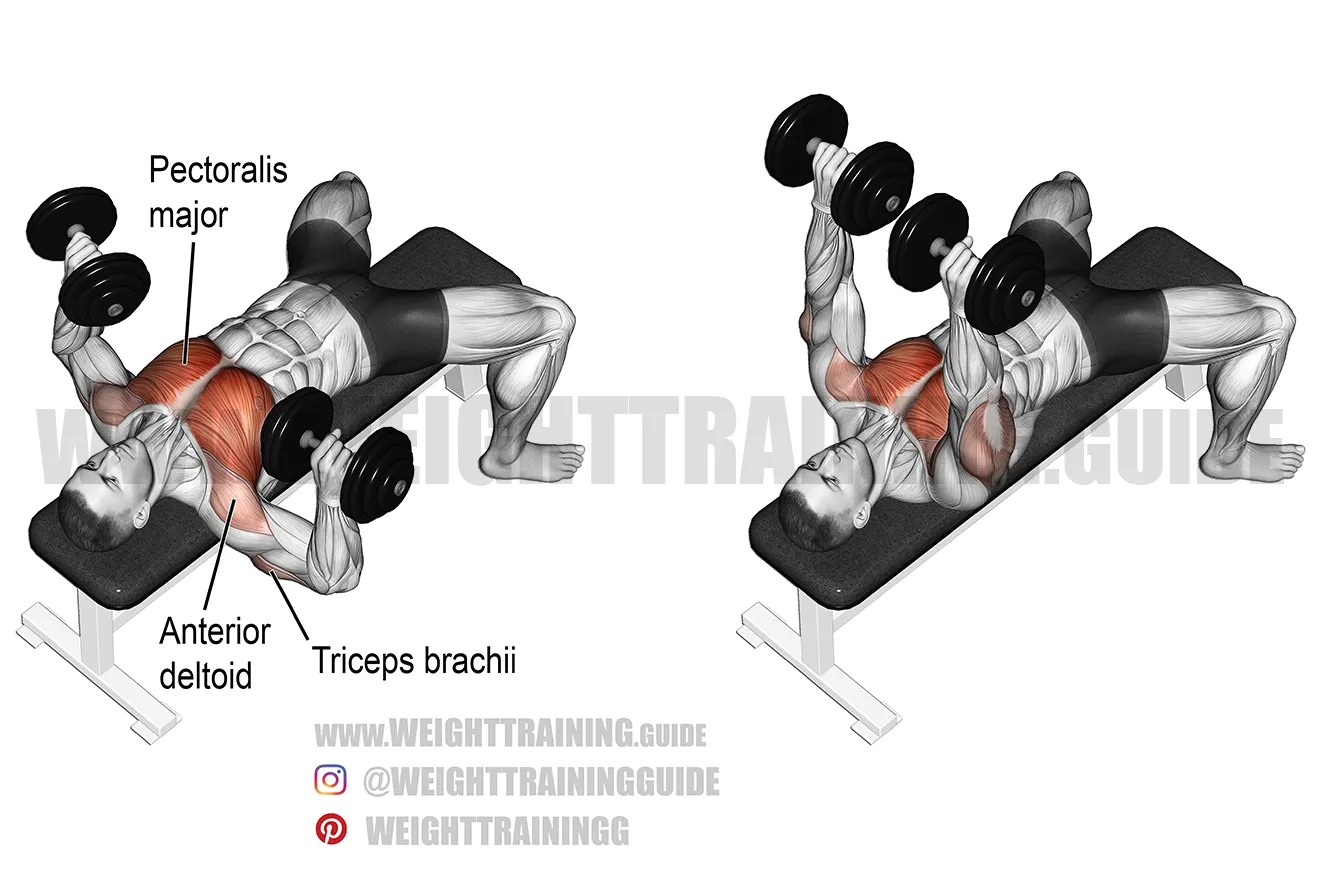
1. Chest Press (Dumbbell Bench Press)
- Primary muscles: Pectoralis major (chest)
- Secondary muscles: Front delts, triceps, and stabilizers around the shoulder joint
- Type: Compound pressing movement
- Benefit: Builds overall chest size and strength; considered the foundation chest exercise with dumbbells
- How: Lie flat on a bench holding dumbbells at chest level, palms facing forward. Press upwards until arms are extended, then lower slowly under control.
- Reps/Sets: Typically 3–4 sets of 6–12 reps
- Notes: Compared to barbell bench, dumbbells allow a greater range of motion, leading to better chest activation and balance development.
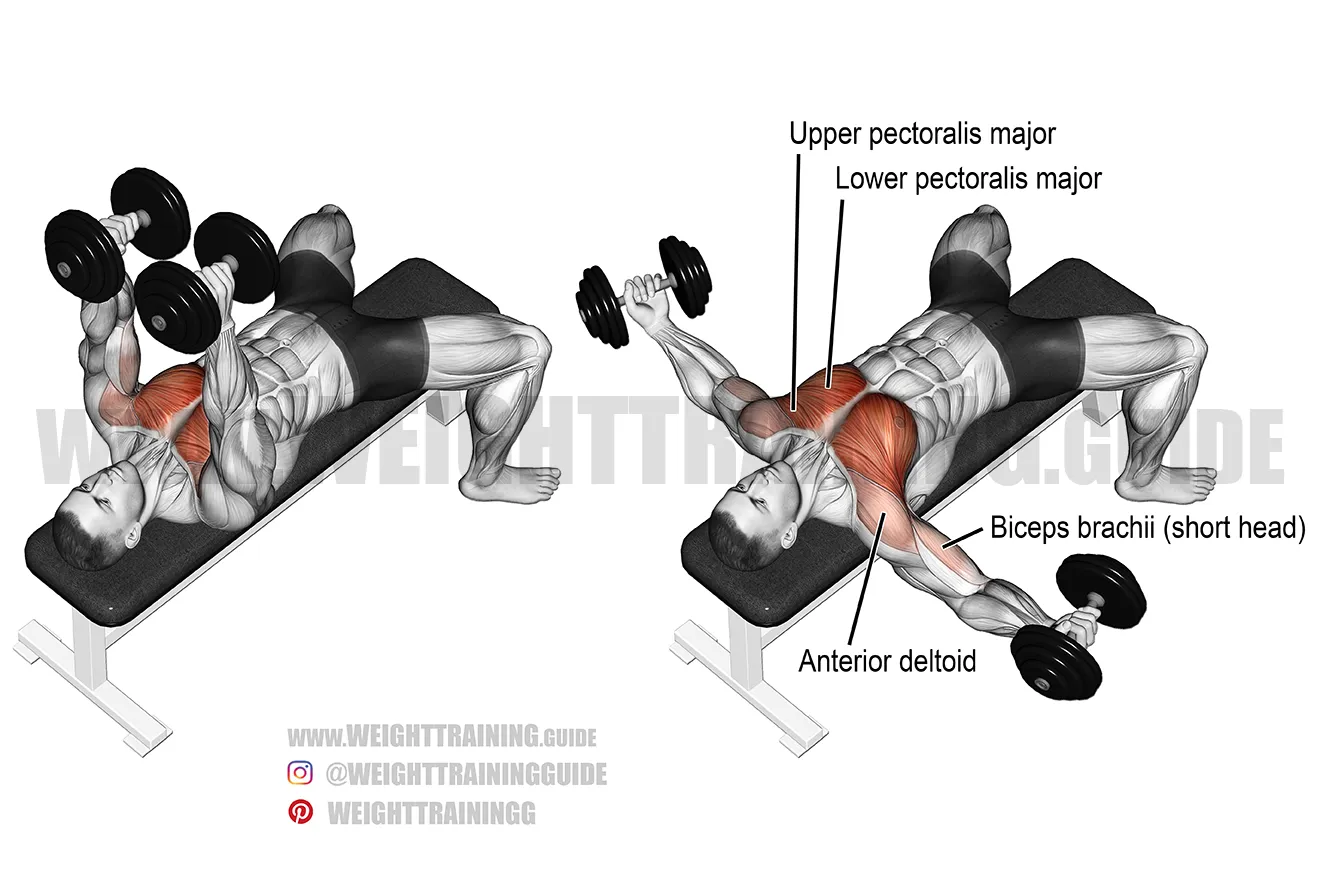
2. Chest Fly (Dumbbell Chest Fly)
- Primary muscles: Pectoralis major (especially the stretched range for chest fibers)
- Secondary muscles: Front delts and stabilizing muscles around the shoulder
- Type: Isolation movement
- Benefit: Improves chest definition, works deep stretch of pec fibers, adds shape to the chest
- How: Lie flat on a bench, dumbbells above chest with arms slightly bent. Slowly lower arms outward in a wide arc until chest feels stretched, then bring arms back together across the chest (like hugging).
- Reps/Sets: 3 sets of 10–15 reps with controlled, moderate pacing
- Notes: Requires light to moderate weight; keep elbows slightly bent to reduce joint stress. Strict form is essential to prevent shoulder strain.
Summary for a Dumbbell Chest Routine
Suggested Dumbbell Weight Range – Chest Workout
| Exercise | Muscle Focus | Role/Movement Type | Sets & Reps | Suggested Weight Range* |
|---|---|---|---|---|
| Chest Press | Chest (Pecs), Front Delts, Triceps | Compound press for strength & size | 3–4 sets of 6–12 reps | Moderate to Heavy: 10–25+ kg per dumbbell (depending on level) |
| Chest Fly | Chest (Pecs, stretch & shape) | Isolation for definition & shape | 3 sets of 10–15 reps | Light to Moderate: 4–12 kg per dumbbell (focus on control) |
⭐ Notes 1 (Weights & Technique):
- Beginners should start lighter to learn proper pressing and control.
- For chest press → progressively overload with heavier dumbbells over time.
- For chest fly → always prioritize control and stretch, not heavy loads.
⭐ Notes 2 (Workout Balance):
- The press builds chest strength and mass.
- The fly works the chest fibers in a stretched range for detail and definition.
- Together, they form a balanced dumbbell-only chest workout.
⭐ Notes 3 (Safety & Recovery):
- Avoid overly heavy dumbbells on fly movement to protect shoulders.
- Rest 60–90 seconds between sets.
- Allow at least 48 hours recovery before training chest again.
BACK EXERCISES
Breakdown of back exercises for a dumbbell workout, including their roles and typical execution tips:
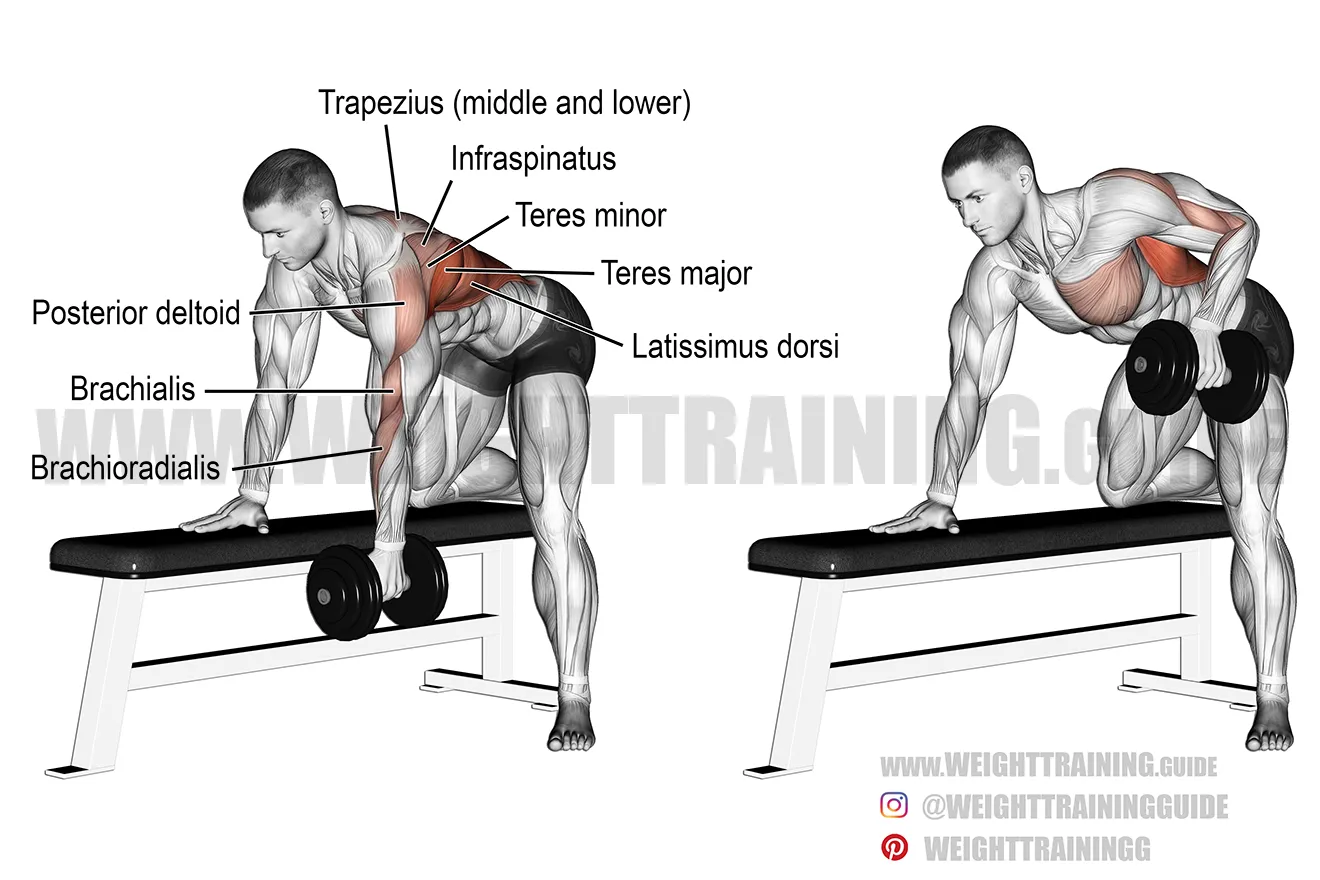
1. Bent-Over Dumbbell Row
- Primary muscles: Latissimus dorsi (lats), rhomboids
- Secondary muscles: Rear delts, traps, biceps, forearms
- Type: Compound pulling movement
- Benefit: Builds back thickness and width, strengthens pulling strength
- How: Hold a dumbbell in each hand, bend forward at the hips (torso ~45° or more to floor), arms extended toward floor. Row dumbbells toward your waist/hip, elbows driving back, then lower slowly.
- Reps/Sets: 3–4 sets of 8–12 reps
- Notes: Keep core braced and back flat; avoid jerking using momentum.
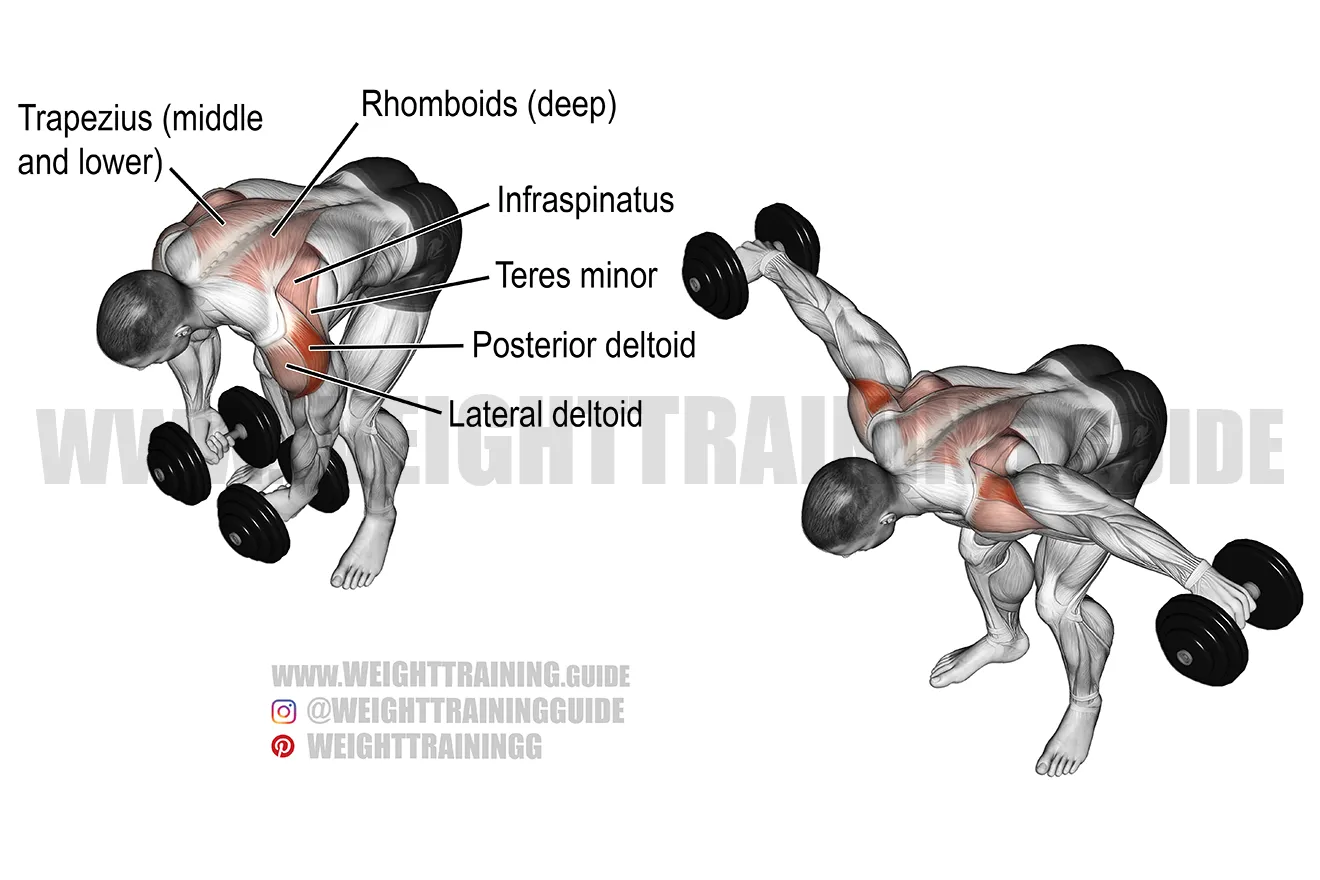
2. Bent-Over Lateral Raise / Reverse Dumbbell Fly
- Primary muscles: Rear delts
- Secondary muscles: Rhomboids, traps, rotator cuff muscles
- Type: Isolation movement
- Benefit: Strengthens and defines rear delts for balanced shoulder development; improves posture and reduces shoulder injuries.
- How: With dumbbells in hand, hinge at hips into bent-over position. With a slight elbow bend, raise arms outward to the sides until at shoulder height, then lower under control.
- Reps/Sets: 3 sets of 12–15 reps
- Notes: Use lighter weights for strict form; emphasize rear delt squeeze at the top.
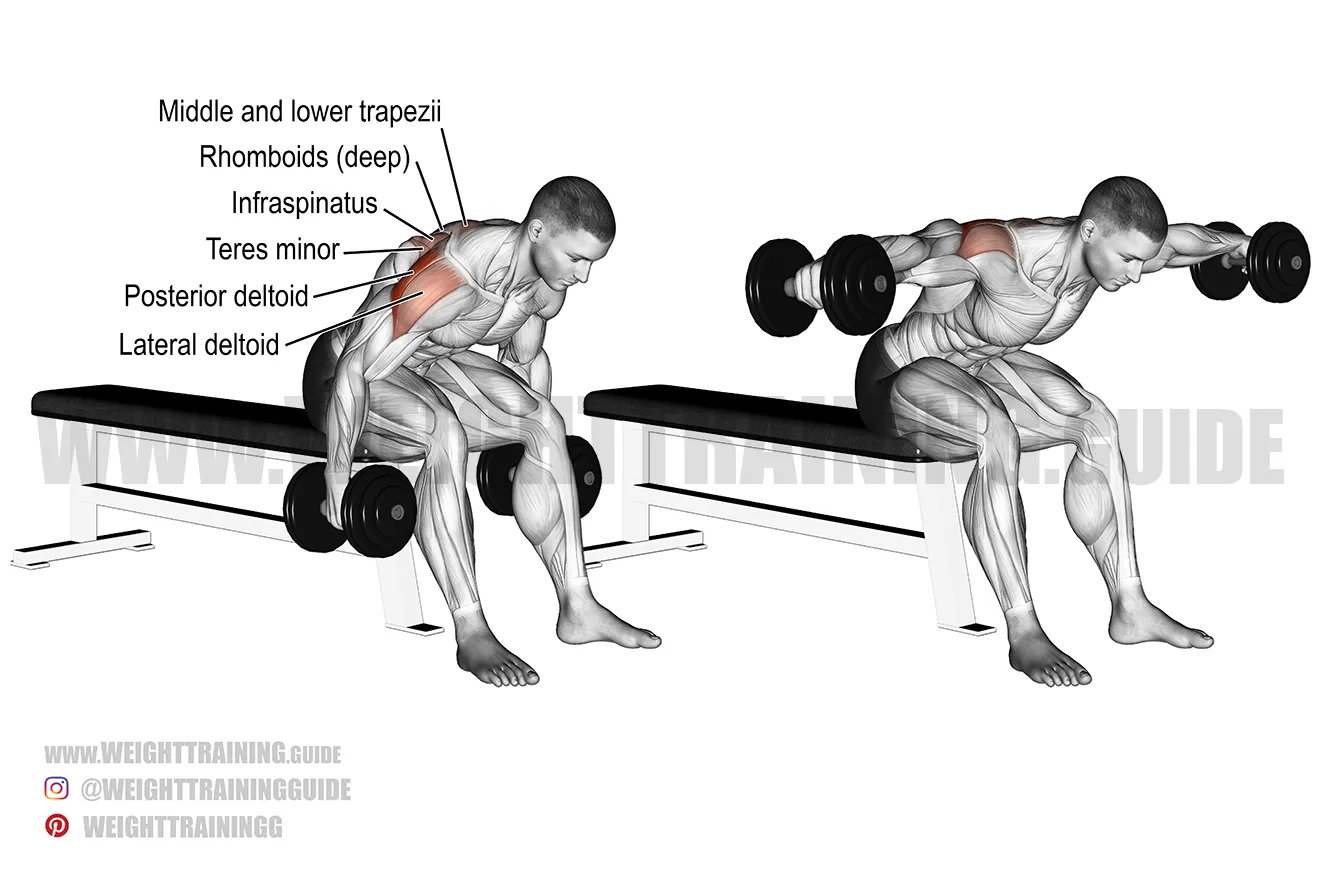
3. Seated Bent-Over Lateral Raise / Seated Reverse Dumbbell Fly
- Primary muscles: Rear delts
- Secondary muscles: Rhomboids, traps
- Type: Isolation movement (more controlled position)
- Benefit: Provides more stability than standing version, reducing lower back strain while isolating the rear delts.
- How: Sit on the edge of a bench, dumbbells in hand, torso bent forward so chest nearly touches thighs. With slight elbow bend, raise dumbbells laterally to shoulder height, then lower slowly.
- Reps/Sets: 3 sets of 12–15 reps
- Notes: Keep chest against thighs to prevent swinging; excellent option for strict rear delt isolation.
Summary for a Dumbbell Back Routine
Suggested Dumbbell Weight Range – Back Workout
| Exercise | Muscle Focus | Role/Movement Type | Sets & Reps | Suggested Weight Range* |
|---|---|---|---|---|
| Bent-Over Dumbbell Row | Lats, Rhomboids, Rear Delts | Compound row for back size & strength | 3–4 sets of 8–12 reps | Moderate to Heavy: 10–25+ kg per dumbbell (depending on level) |
| Bent-Over Lateral Raise / Reverse Fly | Rear Delts, Rhomboids, Traps | Isolation for rear delt strength & posture | 3 sets of 12–15 reps | Light to Moderate: 3–8 kg per dumbbell (form > weight) |
| Seated Bent-Over Lateral Raise / Seated Reverse Fly | Rear Delts (high isolation) | Isolation with stability benefit | 3 sets of 12–15 reps | Light: 2–6 kg per dumbbell (strict, slow, controlled) |
⭐ Notes 1 – Weights & Progression:
- Rows can be progressively loaded with heavy dumbbells.
- Rear delt focused raises/flys must be done with light weights + strict control.
- Prioritize quality movement > load for delt isolation.
⭐ Notes 2 – Workout Balance:
- Rows build overall back size and pulling strength.
- Reverse fly variations ensure rear delt development, balancing pressing movements.
- A 1:1 or at least 2:1 ratio of pulling to pressing is recommended for posture and shoulder health.
⭐ Notes 3 – Safety & Recovery:
- Keep a neutral spine and braced core in all bent-over positions.
- Rest 60–90s between sets; recover 48 hrs before next back/row session.
- Beginners → start with seated version for strict form before progressing to bent-over standing versions.
BICEPS EXERCISES
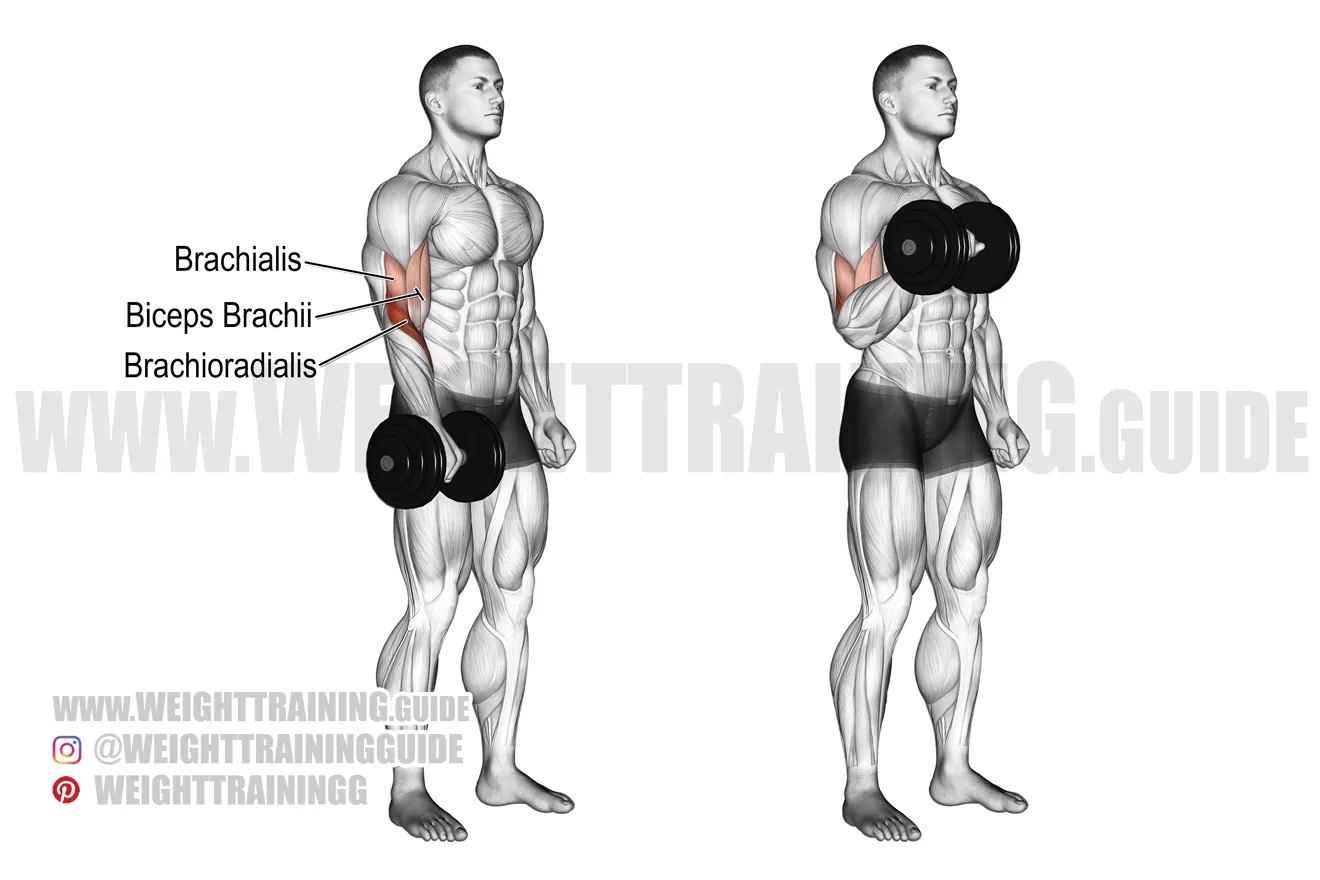
1. One-Arm Dumbbell Reverse Curl
- Primary muscles: Brachialis (underlying muscle beneath the biceps), brachioradialis (forearm)
- Secondary muscles: Biceps brachii (to a lesser extent)
- Type: Isolation movement (curl variation)
- Benefit: Strengthens forearms and brachialis, helping arms appear thicker; balances forearm and grip strength with biceps training.
- How: Hold a dumbbell with an overhand (palms down) grip. Curl up by bending at the elbow, keeping wrist neutral, then lower slowly. Perform one arm at a time.
- Reps/Sets: 3 sets of 10–15 reps each arm
- Notes: Go lighter in weight compared to standard curls; resist using wrist flexion.
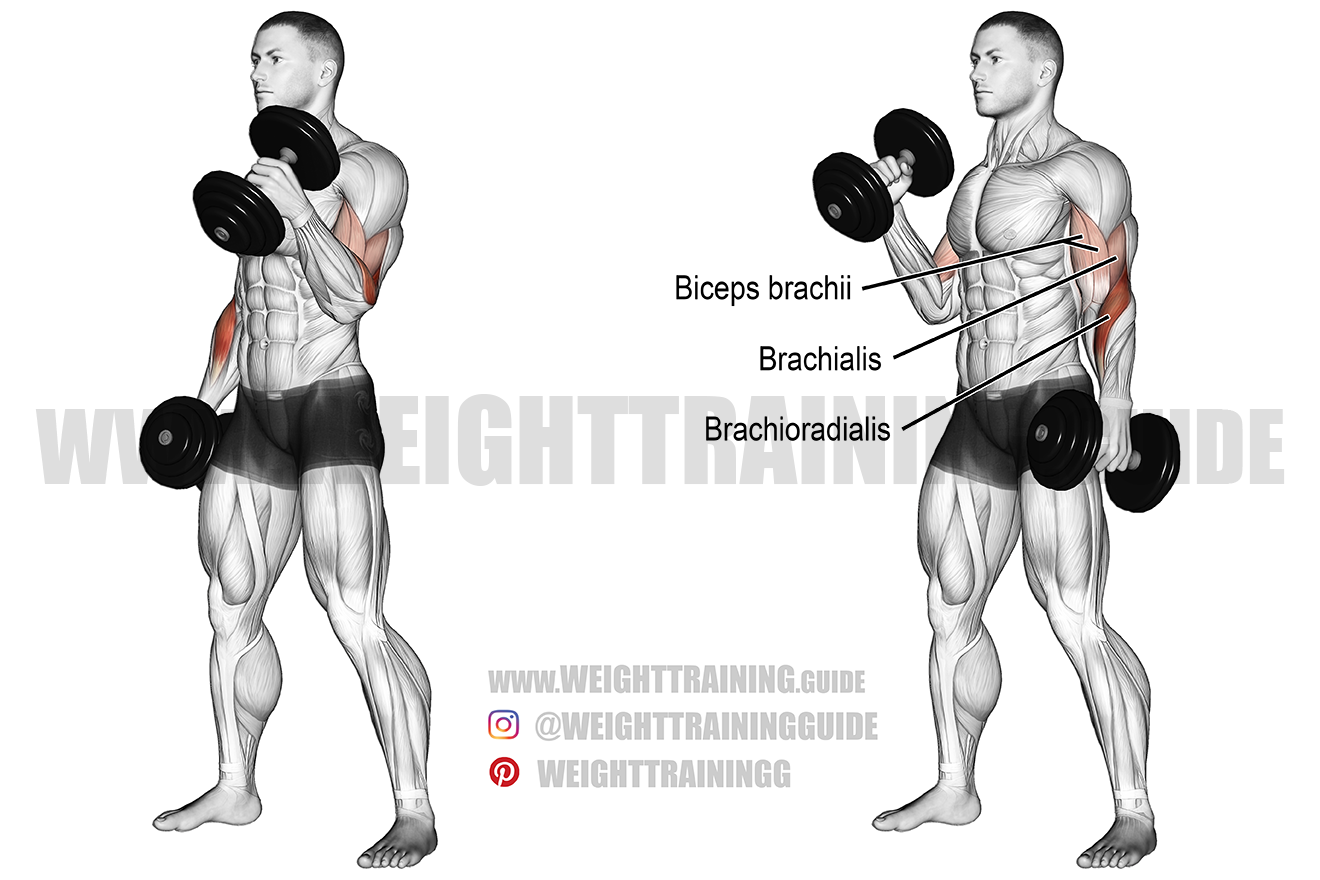
2. Dumbbell Hammer Curl
- Primary muscles: Brachialis, brachioradialis
- Secondary muscles: Biceps brachii (all heads)
- Type: Isolation / curl movement
- Benefit: Builds overall arm thickness and strength by targeting both biceps and forearms; improves grip strength.
- How: Hold dumbbells with a neutral grip (palms facing each other). Curl up while keeping elbows close to torso. Lower down with control.
- Reps/Sets: 3–4 sets of 8–12 reps
- Notes: Can be done alternating or both arms together; avoid swinging to maintain tension in arms.
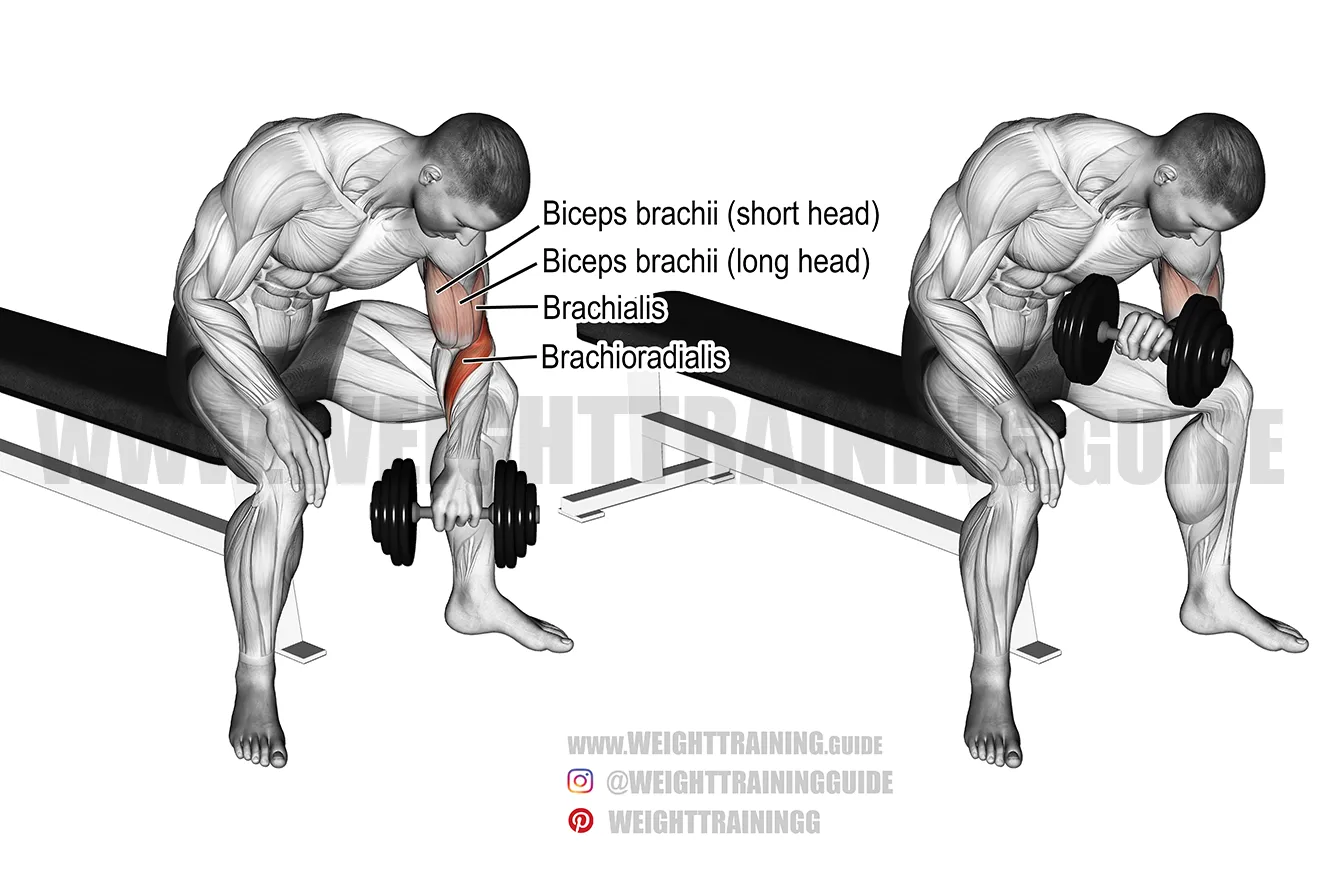
3. Dumbbell Reverse-Grip Concentration Curl
- Primary muscles: Brachialis, brachioradialis
- Secondary muscles: Biceps brachii (with high forearm involvement)
- Type: Isolation movement
- Benefit: Isolates brachialis and forearm muscles while still involving biceps; excellent for arm definition and balanced development.
- How: Sit on a bench, lean forward slightly, hold dumbbell in one hand with palm facing down (reverse grip). Place elbow on inner thigh for stability, curl dumbbell upward, then lower slowly.
- Reps/Sets: 3 sets of 10–12 reps per arm
- Notes: Keep range of motion strict; focus on squeezing forearms and brachialis in top contraction.
Summary for a Dumbbell Biceps Routine
Suggested Dumbbell Weight Range – Biceps Workout
| Exercise | Muscle Focus | Role/Movement Type | Sets & Reps | Suggested Weight Range* |
|---|---|---|---|---|
| One-Arm Dumbbell Reverse Curl | Brachialis, Brachioradialis | Isolation for forearm + arm thickness | 3 sets of 10–15 reps | Light to Moderate: 4–10 kg (strict control) |
| Dumbbell Hammer Curl | Brachialis, Biceps, Forearms | Isolation for size & strength | 3–4 sets of 8–12 reps | Moderate: 6–14 kg (build strength gradually) |
| Dumbbell Reverse-Grip Concentration Curl | Brachialis, Forearms, Biceps | Isolation for detail & definition | 3 sets of 10–12 reps | Light: 3–8 kg (form critical, no swinging) |
⭐ Notes 1 – Technique & Weights:
- Reverse grip movements should be lighter for joint health and strict form.
- Hammer curls can handle more load and progressive overload.
- Keep wrists neutral and avoid bending them to reduce strain.
⭐ Notes 2 – Workout Balance:
- These reverse grip and hammer variations emphasize brachialis + brachioradialis, which makes arms look thicker and improves grip/forearm strength.
- To balance aesthetics → combine these with standard dumbbell curls (supinated grip) in a complete biceps program.
⭐ Notes 3 – Safety & Recovery:
- Avoid jerking movements; biceps and forearms strain easily.
- Rest 60–90s between sets.
- Train biceps directly 1–2x/week, but they also get indirect work through back/pulling exercises.
TRICEPS EXERCISES
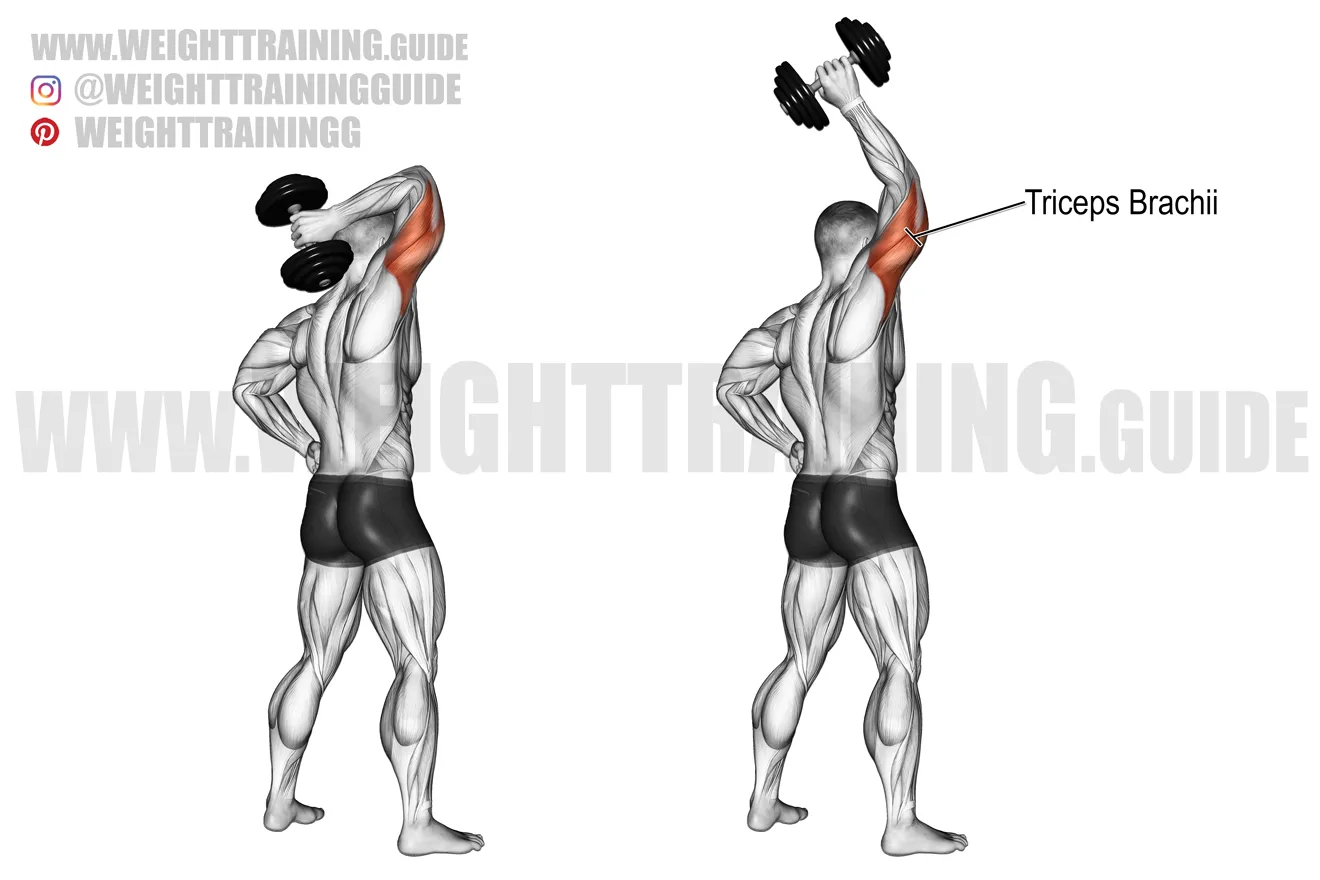
1. Standing One-Arm Overhead Dumbbell Triceps Extension
- Primary muscles: Triceps brachii (long head emphasized due to overhead stretch)
- Secondary muscles: Shoulders (stabilizers), core (for balance while standing)
- Type: Isolation movement (overhead extension)
- Benefit: Builds triceps size, especially in the long head, creating fuller arms and better arm shape.
- How: Stand upright holding a dumbbell in one hand. Raise it overhead, elbow pointing up. Lower the dumbbell behind your head by bending the elbow, then extend arm back to lockout. Perform one arm at a time.
- Reps/Sets: 3 sets of 10–12 reps each arm
- Notes: Keep elbow tight to the head; avoid flaring. Start with lighter dumbbells to master control.
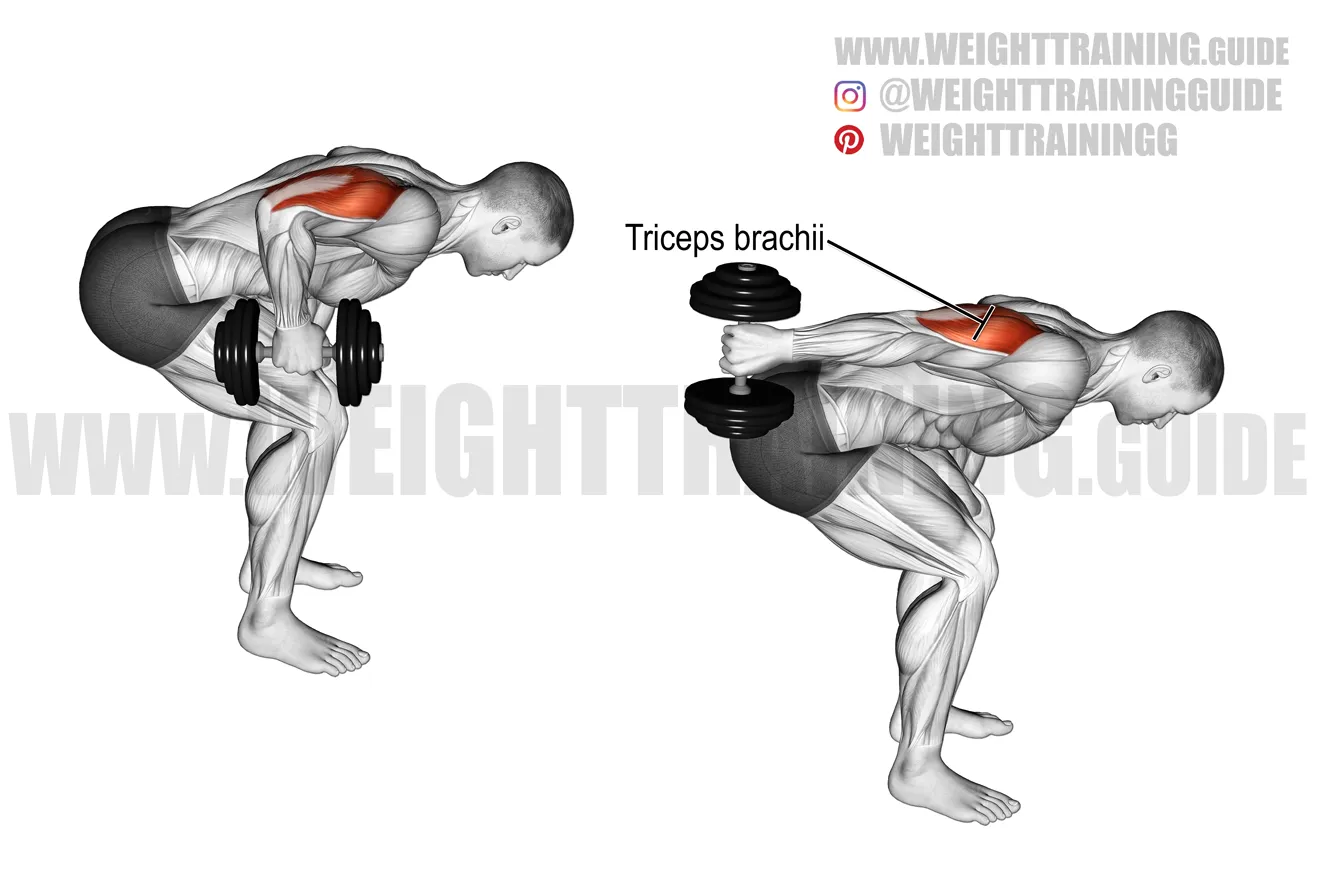
2. Standing Dumbbell Kickback
- Primary muscles: Triceps brachii (all heads, emphasis on contraction)
- Secondary muscles: Rear delts, core (stability in bent-over stance)
- Type: Isolation movement (kickback extension)
- Benefit: Great for peak contraction of triceps, enhanced arm definition, and finishing triceps pump.
- How: Hold a dumbbell in each hand, hinge forward slightly at hips. Keep elbows close to torso, bent at 90°. Extend forearms backward until arms are straight, squeeze triceps, then return slowly.
- Reps/Sets: 3 sets of 12–15 reps
- Notes: Use strict form, lighter weights; focus on squeeze at full extension rather than heavy load.
Summary for a Dumbbell Triceps Routine
Suggested Dumbbell Weight Range – Triceps Workout
| Exercise | Muscle Focus | Role/Movement Type | Sets & Reps | Suggested Weight Range* |
|---|---|---|---|---|
| Standing One-Arm Overhead Dumbbell Extension | Triceps (long head) | Isolation for long head size & stretch | 3 sets of 10–12 reps | Light to Moderate: 4–10 kg per dumbbell (strict form first) |
| Standing Dumbbell Kickback | Triceps (all heads) | Isolation for peak contraction & definition | 3 sets of 12–15 reps | Light: 2–6 kg per dumbbell (focus on contraction, not weight) |
⭐ Notes 1 – Technique & Weights:
- Overhead extensions allow progressive overload but must be done carefully to avoid elbow strain.
- Kickbacks should always be light and strict, otherwise shoulders and momentum take over.
- Keep movements smooth, avoid jerking.
⭐ Notes 2 – Workout Balance:
- Overhead extensions build size (long head stretch + load).
- Kickbacks add the shape and definition, especially in finishing stages.
- Together → they balance mass + aesthetics for triceps.
⭐ Notes 3 – Safety & Recovery:
- Warm up elbows before isolation moves.
- Rest 60–75s between sets.
- Train triceps 1–2x/week (they also get worked heavily during chest/shoulder pressing exercises).
SHOULDER EXERCISES
Breakdown of shoulder exercises for a shoulder workout, including their roles and typical execution tips:
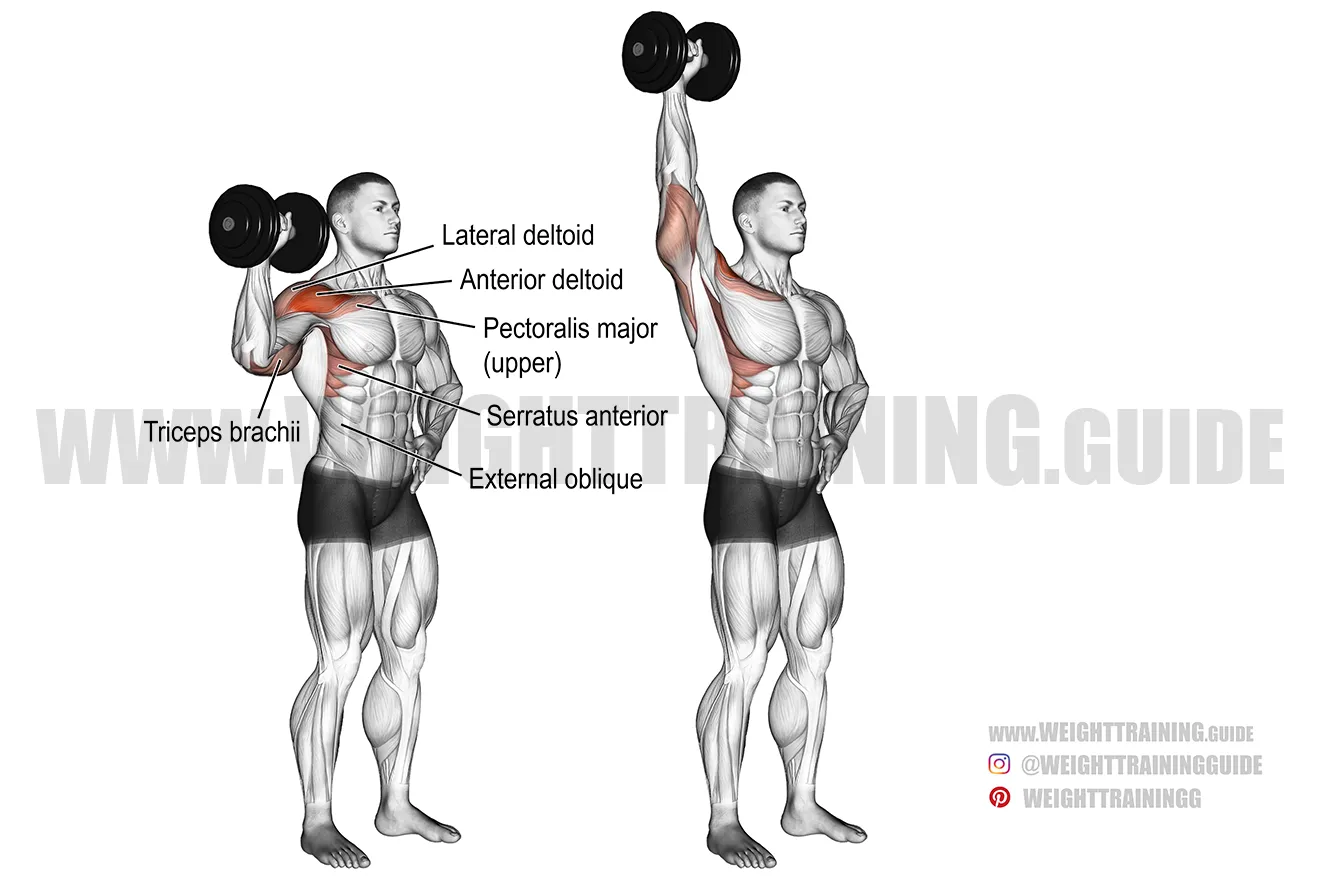
- Shoulder Press (Dumbbell Overhead Press)
- Primary muscles: Anterior (front) delts, also medial delts, traps, triceps, and some upper chest.
- Type: Compound pressing movement.
- Benefit: Builds overall shoulder strength, mass, and pressing power. It also engages core and upper body stabilizers.
- How: Press dumbbells overhead from shoulder height until arms fully extend; lower down with control.
- Reps/Sets: Typically 3-4 sets of 6-12 reps; heavier weights for strength, moderate for hypertrophy.
- Notes: Good for overall development and should be a staple in shoulder routines.
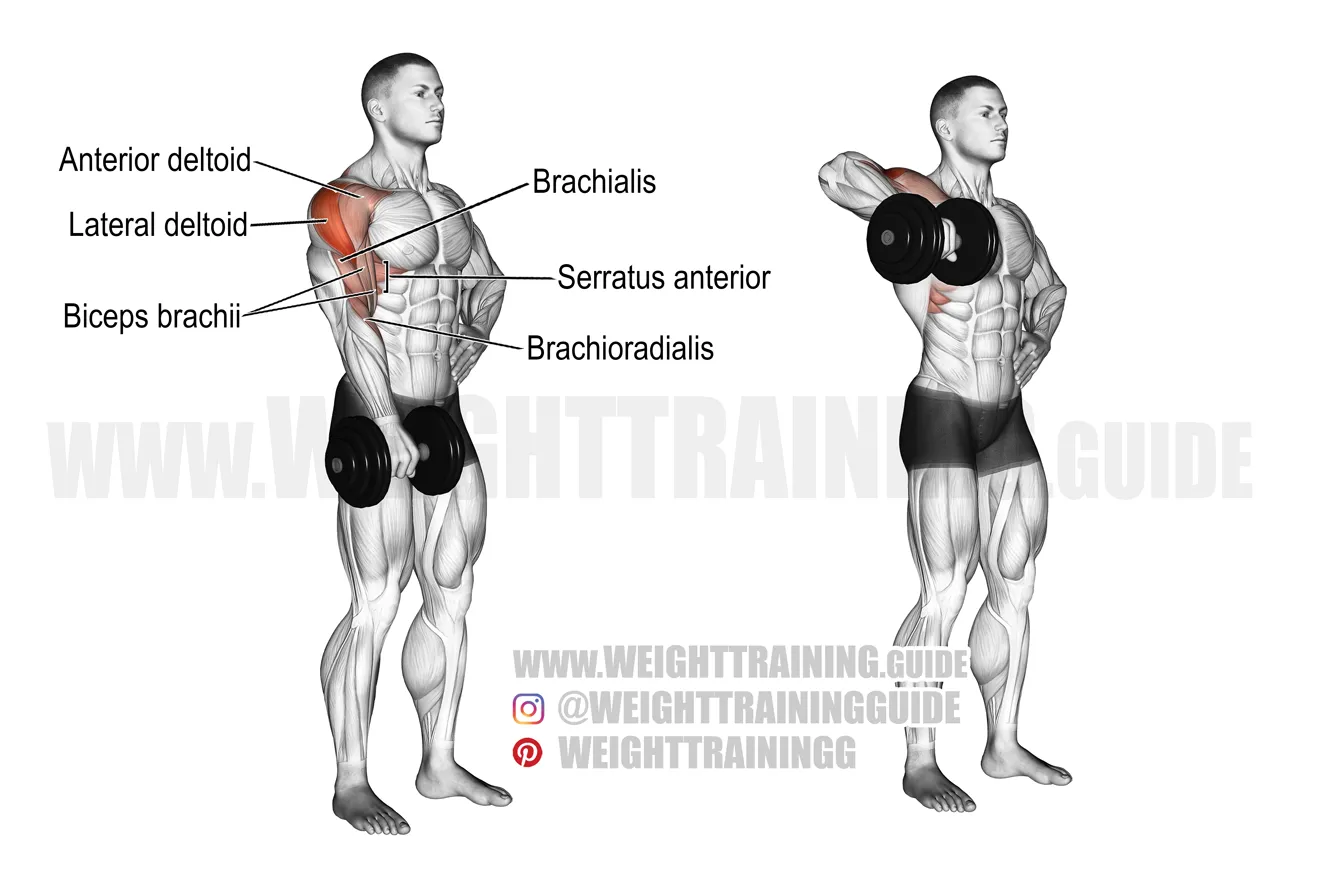
- Upright Row
- Primary muscles: Lateral delts and trapezius.
- Secondary muscles: Front delts and biceps.
- Type: Compound pulling movement targeting upper traps and side delts.
- Benefit: Develops trap size and shoulder width; improves posture and pulling strength.
- How: Pull dumbbells or barbell close to the body from waist to chest height, elbows driving upward.
- Reps/Sets: Commonly 3 sets of 8-12 reps.
- Notes: Requires good form to avoid shoulder impingement; can be substituted with lateral raises plus shrugs.
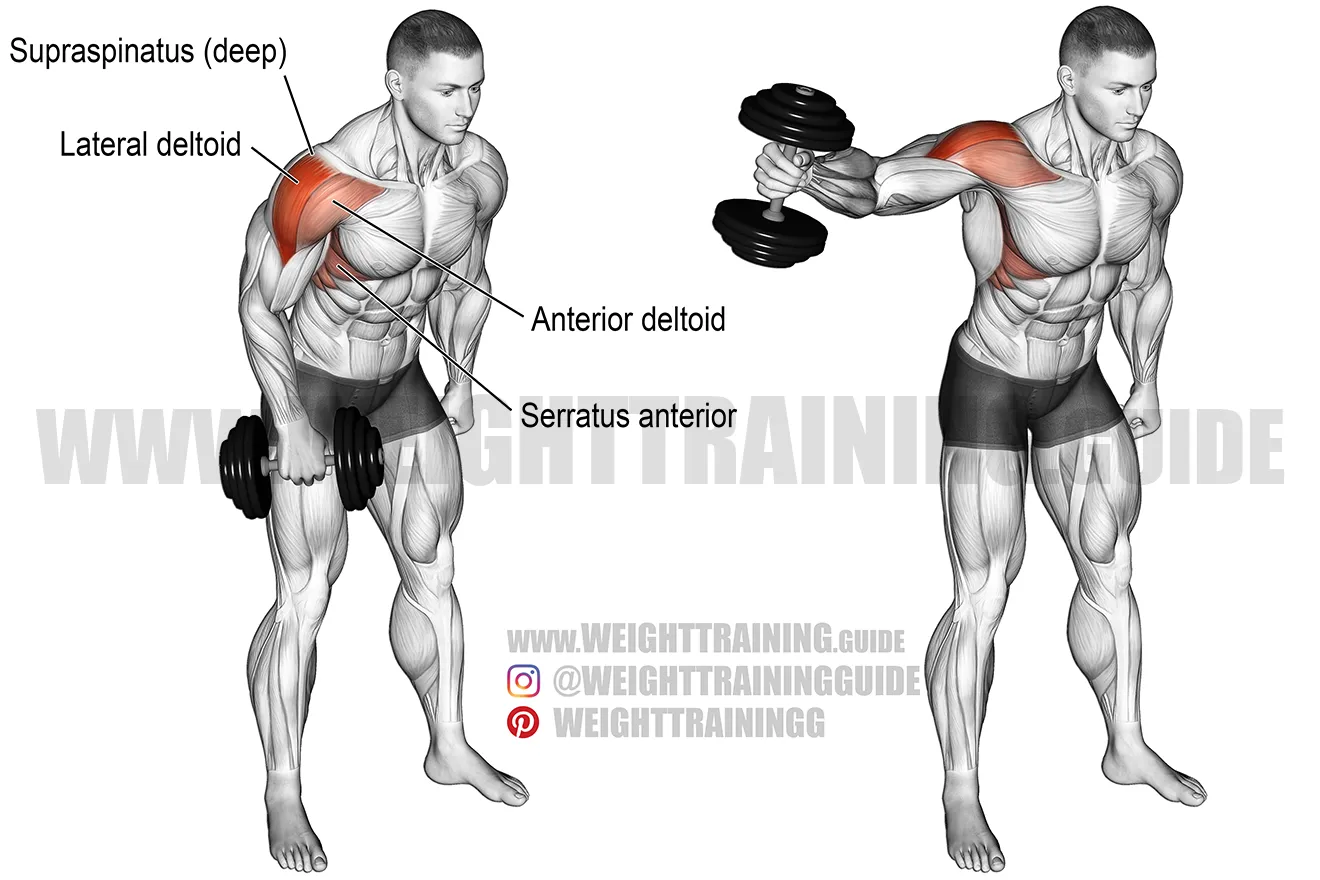
- Side Raises (Lateral Raises)
- Primary muscles: Medial delts (side shoulder).
- Type: Isolation movement.
- Benefit: Critical for shoulder width and defined shoulder caps.
- How: Raise dumbbells or cables laterally outward to shoulder height with slightly bent elbows, then lower slowly.
- Reps/Sets: Usually 3 sets of 12-15+ reps with lighter weights for control.
- Notes: Helps shape and widen shoulders; should be done with strict form and controlled reps.
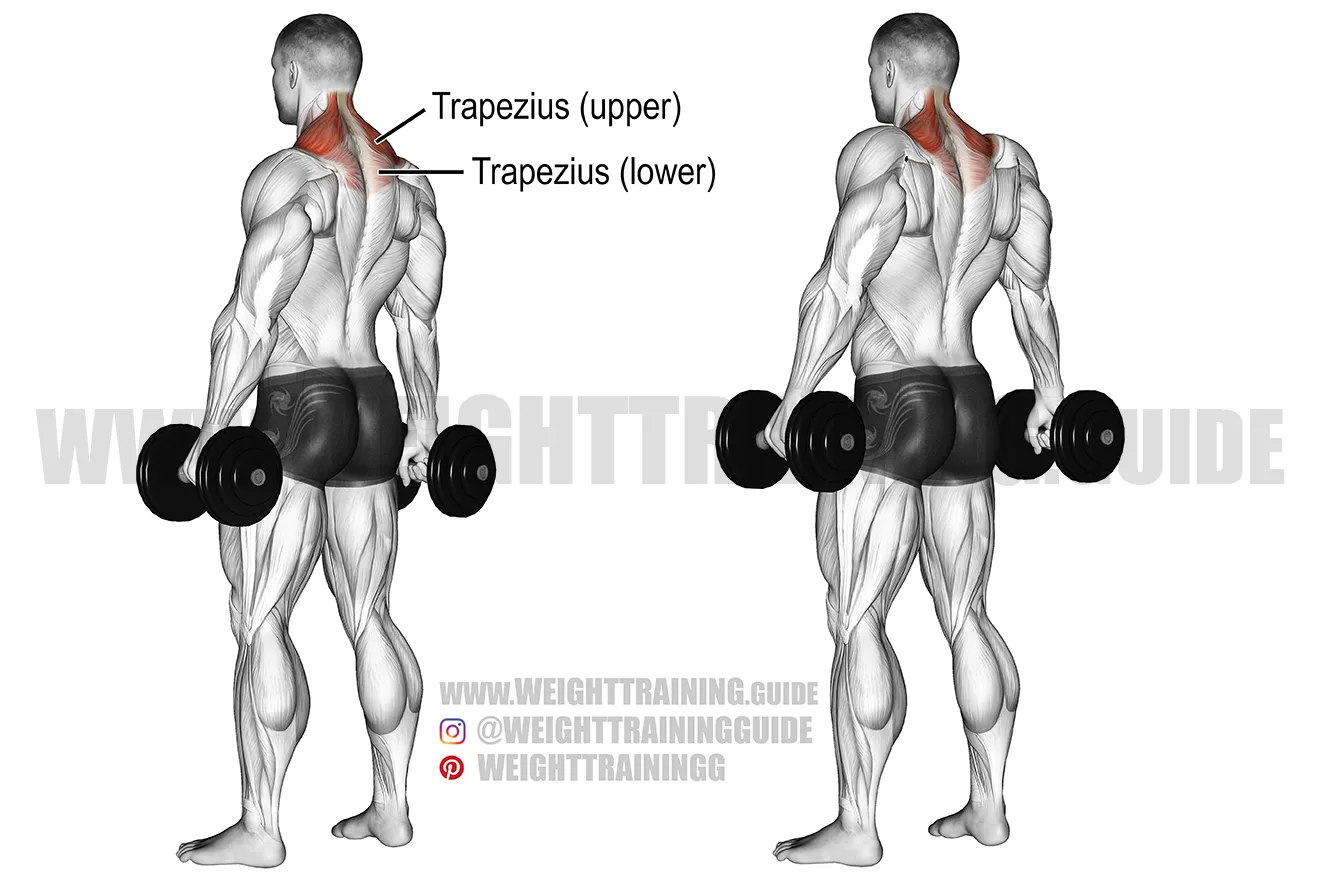
- Shrugs
- Primary muscles: Upper trapezius.
- Type: Isolation movement.
- Benefit: Builds trap size and improves upper back strength and posture.
- How: Hold dumbbells at your sides and shrug your shoulders straight up, pause, then lower.
- Reps/Sets: 3 sets of 15-20 reps are common.
- Notes: Controlled movement maximizes trap activation and avoids using momentum.
Summary for a balanced dumbbell shoulder routine:
Suggested Dumbbell Weight Range – Shoulder Workout
| Exercise | Muscle Focus | Role/Movement Type | Sets & Reps | Suggested Weight Range* |
|---|---|---|---|---|
| Shoulder Press | Anterior & Medial Delts, Triceps, Traps | Compound press for strength & size | 3–4 sets of 6–12 reps | Moderate to Heavy: 10–20+ kg per dumbbell (depending on level) |
| Upright Row | Lateral Delts, Traps | Compound row for traps & width | 3 sets of 8–12 reps | Light to Moderate: 6–12 kg per dumbbell (form crucial) |
| Side Raises | Medial Delts | Isolation for shape & width | 3 sets of 12–15 reps | Light: 3–8 kg per dumbbell (strict control) |
| Shrugs | Upper Traps | Isolation for trap size & posture | 3 sets of 15–20 reps | Moderate to Heavy: 10–20+ kg per dumbbell (depending on trap strength) |
⭐ Notes 1:
- Beginners should start on the lower end of the ranges to master form.
- Advanced lifters can push heavier progressively while maintaining control.
- Prioritize lighter, controlled weights for isolation moves (Side Raises, Upright Rows) to avoid shoulder strain.
- Use heavier loads for presses and shrugs to promote strength and size.
Notes 2:
- This lineup targets all major shoulder muscles and the traps, combining compound and isolation exercises for comprehensive development.
- Focus on good form and controlled movements, especially on Upright Rows and Side Raises, to prevent injury and maximize muscle activation.
- Rest 60-90 seconds between sets and allow 48 hours of recovery between shoulder workouts.
- This is a very effective dumbbell-only shoulder day program suitable for building size, strength, and definition.
- Weight ranges depend on individual strength levels and experience. Beginners should start on the lighter side to ensure proper form, while more advanced lifters can push heavier weights progressively.
Notes 3:
- Use heavier weights for Shoulder Press and Shrugs to build strength and size.
- Use lighter weights for Upright Rows and especially Side Raises, focusing on strict form and controlled reps.
- Increase weights gradually over time as strength and technique improve.
- Always prioritize form over heavy weights, especially with shoulder exercises to reduce injury risk.
LEGS EXERCISES
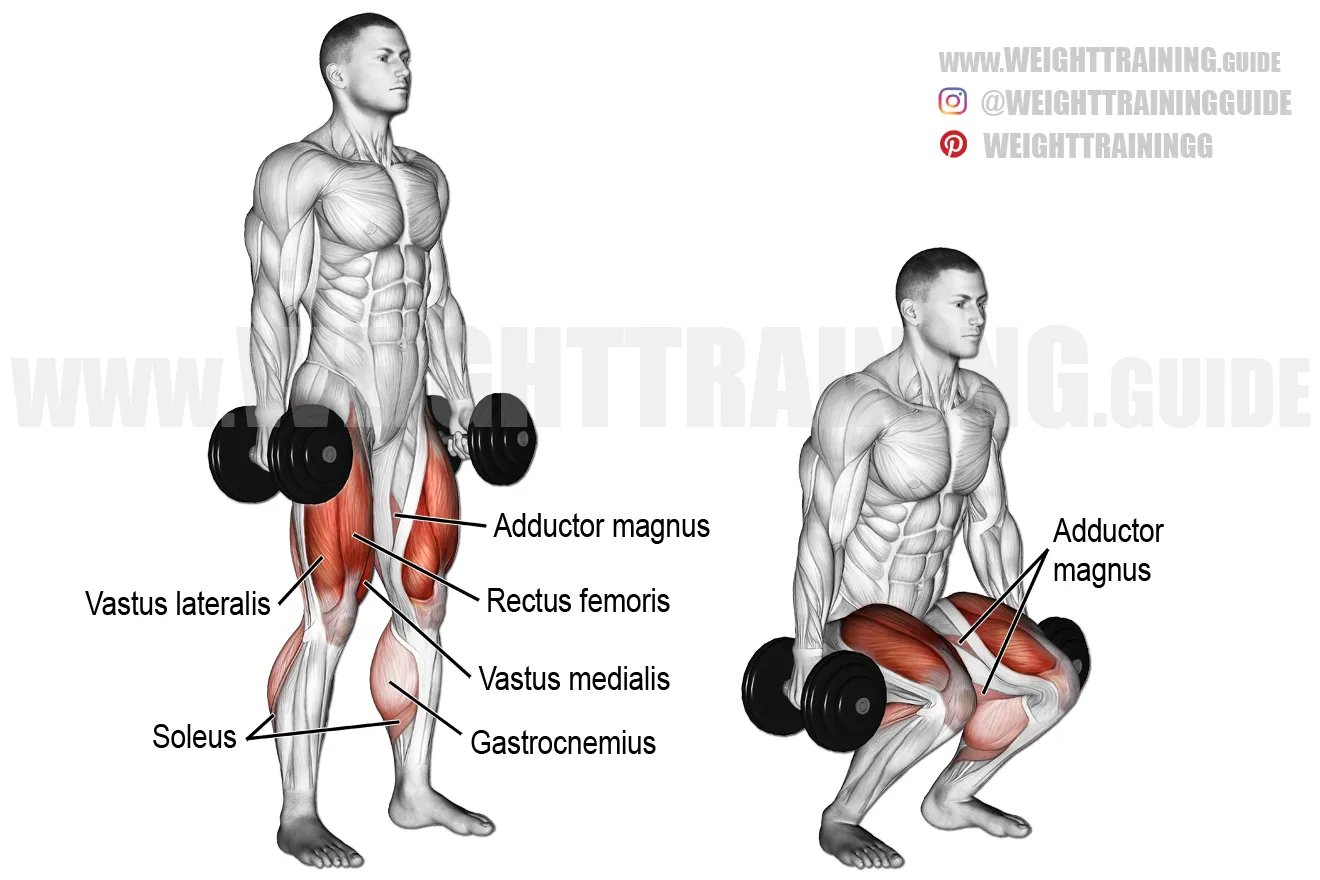
1. Dumbbell Squat
- Primary muscles: Quadriceps, glutes, hamstrings
- Secondary muscles: Core, calves, forearms (grip)
- Type: Compound movement
- Benefit: Builds overall leg strength and size, functional movement strength, and athletic base.
- How: Hold dumbbells at your sides (or racked at shoulders). Stand with feet shoulder-width apart. Lower hips back and down into squat (thighs parallel to floor), then push back up to standing.
- Reps/Sets: 3–4 sets of 8–12 reps
- Notes: Keep spine neutral, engage core, avoid knees caving in.
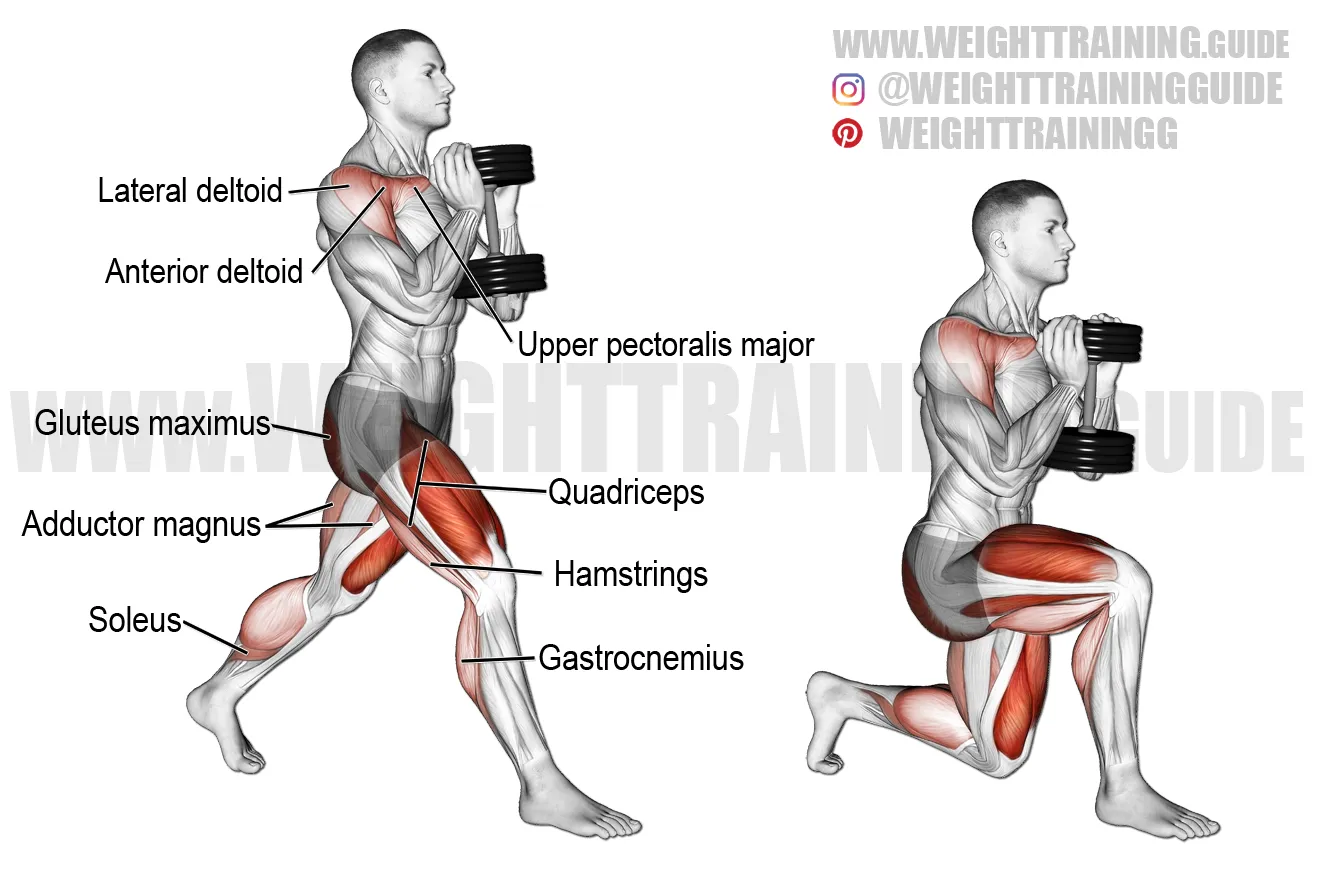
2. Dumbbell Goblet Squat
- Primary muscles: Quadriceps, glutes
- Secondary muscles: Core, upper back (from holding dumbbell)
- Type: Compound squat variation
- Benefit: Excellent for beginners to learn correct squat form. Enhances quad and glute development with strong core engagement.
- How: Hold a single dumbbell vertically at chest height (like holding a goblet). Squat down keeping chest upright and elbows pointing down slightly inside knees. Stand back up to starting position.
- Reps/Sets: 3–4 sets of 10–15 reps
- Notes: Keep torso upright; ideal for mobility, balance, and safe squat mechanics.
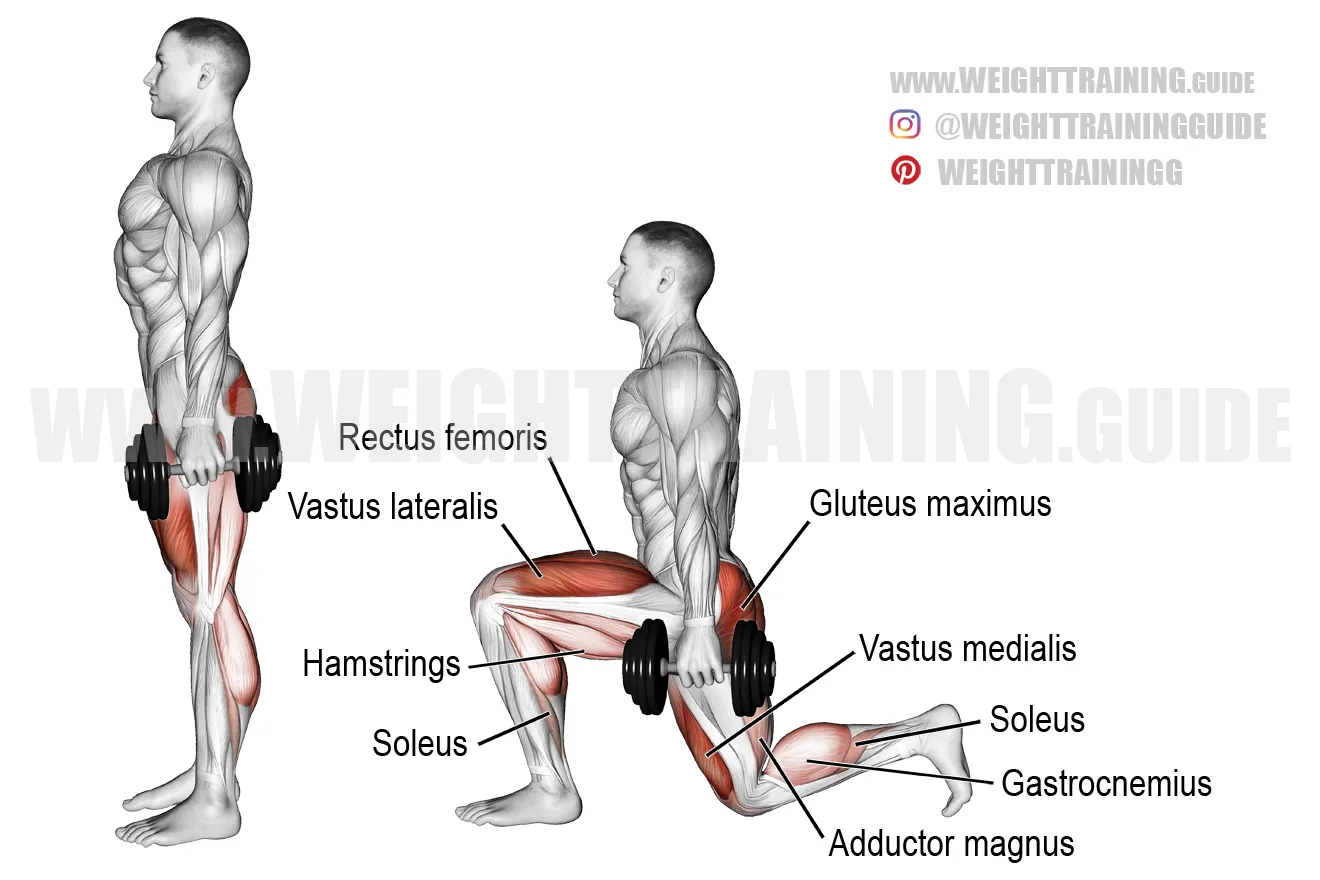
3. Dumbbell Lunges
- Primary muscles: Quads, glutes, hamstrings
- Secondary muscles: Calves, core (stability), grip
- Type: Compound unilateral movement
- Benefit: Builds unilateral leg strength, balance, and symmetry between legs. Adds dynamic stability.
- How: Hold dumbbells at your sides. Step forward (or backward for reverse lunge), lowering until front leg is ~90° at the knee and back knee almost touches ground. Push through front heel to return to standing. Repeat other leg.
- Reps/Sets: 3 sets of 10–12 reps per leg
- Notes: Start with short steps until balance improves; keep core braced and upper body tall.
Summary for a Dumbbell Leg Routine
Suggested Dumbbell Weight Range – Leg Workout
| Exercise | Muscle Focus | Role/Movement Type | Sets & Reps | Suggested Weight Range* |
|---|---|---|---|---|
| Dumbbell Squat | Quads, Glutes, Hamstrings | Compound squat for size & strength | 3–4 sets of 8–12 reps | Moderate to Heavy: 10–25+ kg per dumbbell (depending on level) |
| Dumbbell Goblet Squat | Quads, Glutes, Core | Compound squat, form-builder | 3–4 sets of 10–15 reps | Moderate: 8–20 kg (one dumbbell held at chest) |
| Dumbbell Lunges | Quads, Glutes, Hamstrings | Unilateral for balance & symmetry | 3 sets of 10–12 reps per leg | Light to Moderate: 6–12 kg per dumbbell (start lighter for stability) |
⭐ Notes 1 – Technique & Progression:
- Prioritize form > load especially when learning lunges and squats.
- Progressively increase dumbbells once depth and balance are consistent.
- Goblet squat is a great “teaching tool” before heavier squat variations.
⭐ Notes 2 – Balance & Application:
- Squats = size and strength base.
- Goblet Squat = form-builder + core work.
- Lunges = unilateral strength + symmetry (avoiding imbalances).
⭐ Notes 3 – Safety & Recovery:
- Keep knees in line with toes throughout squat/lunge.
- Maintain core bracing to prevent lower back rounding.
- Rest 90s between heavy squat sets, 60s for goblet/lunges.
- Allow 48–72 hours recovery before next leg training.
Some Key Points:
Difference Compound Exercises vs Isolation Exercises
- Compound exercises: Involve multiple joints and large muscle groups, enabling heavier weights, greater overall strength and mass gains, and functional movement patterns.
- Isolation exercises: Target specific smaller muscles with a single joint movement, focusing on muscle shaping, endurance, and fine-tuned definition. These require lighter weights and higher reps. Understanding these principles helps design balanced workouts that optimize strength, size, and aesthetics while reducing injury risk by not overloading small muscles with heavy weights meant for large muscle groups.
Progressive Overload
You should focus on progressively increasing weights on compound exercises because they engage multiple large muscles and improve overall strength and muscle mass. Gradually increasing weight here leads to strength gains and size development. For isolation exercises, it’s important to prioritize proper form and muscle activation over heavy weights. However, you can still slowly increase the weight over time, but the increases should be more gradual and moderate. The goal is to improve muscle endurance, control, and definition without compromising technique or risking injury. So to summarize:
- Compound exercises: Regularly increase weights to build strength and size.
- Isolation exercises: Use lighter weights, focus on form, and increase weights slowly and carefully when your control and reps improve. This balanced approach maximizes muscle development safely and effectively.